
 |
 |
 |
 |
 |
 |
 |
 |
| The
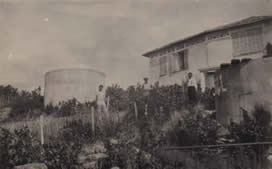
Moraglia Company was established in the early 1900’s. It started out as a simple grower of roses and carnations of Mediterranean quality. Important work on the qualitative improvement of carnation was starting at that time in France. The researches of Dalmais, Isnart and Smith were soon followed by Italian breeders, mainly located in Sanremo. Using these expertises, Mr. Silvano Moraglia started to experiment with the new methods of genetically improving the carnations. |
 |
|||
 |
Research
became the main driving force in the company. Mr. Domenico Aicardi did valuable work in this specific field thanks to his profound technical knowledge. At this time some varieties of carnations became extremely popular on the Sanremo Riviera: among these were the Rubino, Galileo, Capri, Impero, Brasil, Nada, Nervia, and Lisa varieties. Other varieties of this initial period also became well known and appreciated worldwide. Some of them are still cultivated, like the Sergio, Diana, Dalì, Santafè, Bacio and Reno varieties. |
|||
|
Today the Company Moraglia is managed by Carlo Moraglia, son of Silvano, who continues the family research tradition, combining the hybridisation techniques and the traditional selection methods derived from his father’s experience with the new techniques of genetic improvement carried on both in the crossbreeding programs and in the laboratory. The research activity is carried out mainly at our head offices, situated in Via Banchette Napoleoniche and Via Val d’Olivi in Poggio di Sanremo, where we have the breeding and the selection greenhouses, the greenhouse for the conservation of the variety nucleus, the laboratory and the greenhouse shop-window. The nursery for the growth and production of cuttings of the Moraglia varieties is located at Piani di Cipressa. |
 Silvano
and Maria Giovanna |
|
Today we continue our family’s commitment to research. This allows us to present a truly comprehensive catalogue, and enables us to offer a full range of standard and spray carnations, distributed to cultivators worldwide. Additional varieties, known as “mgr” or “mogr” are sold under licence agreements on national and international markets. |